Padma bridge: Time and cost both increasing
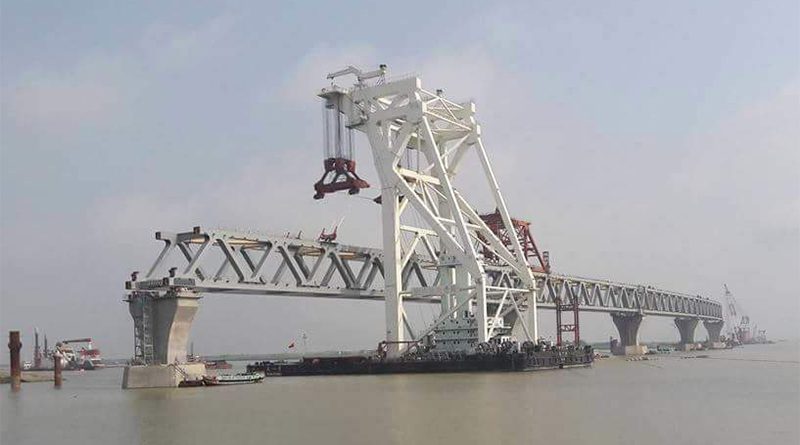
Work on the Padma bridge project had already been set back due to changes in the design and delays in river training. And now, over the past four months, it has not been possible to put the steel spans in place due to the coronavirus outbreak and strong current caused by the floods. So work on the bridge has been delayed yet another time. With the strong current somewhat abating, one span could be put in place on Sunday at the Mawa end of the bridge.
With these delays hampering the progress in the work, it is uncertain as to whether the bridge will be ready by December next year. These delays have also increased costs.Padma bridge has 42 pillars, all of which have been put in place. Then 41 spans are to be attached to these pillars, each span 150 metres in length. Once these are all joined together, the main structure of 6.15km bridge will be in place.

So far 32 spans have been placed on the pillars and 4.80 km of the bridge is visible. The remaining 9 spans will all be placed at the Mawa end of the bridge.
Once all the spans are attached to the pillars, the railway lines will have been installed. The road will also have to be completed for vehicular movement. Only then will the bridge be ready for use.
Sources associated with the implementation of the Padma Bridge project said that the contractors are not accepting liability for the delay in completion of the work. They say that the work has been delayed because of the change in design related to piling of 22 pillars, delay in river training, river erosion and strong current. The government has accepted their claims.